Overview
Pilipinas Live
Pilipinas Live is a sports-first streaming platform designed to serve Filipino sports fans worldwide. The project focused on improving live sports engagement, fan interaction, and cross-device viewing experiences. The product was built on Quickplay’s white-label OTT platform, which enabled rapid customization while supporting large-scale live streaming, real-time data, and multi-device delivery.
Company:
Pilipinas Live OTT streaming platform powered by Quickplay Employer: HumanX (Full-time)
Domain:
OTT Platforms · Sports Streaming · Media & Entertainment · Live Content Experiences · White-label Product Ecosystems · Basketball (PBA), Volleyball, League Sports
Timeline:
10 months (Aug 2022 - May 2023)
Platform:
Mobile · Web · Tablet · Apple TV
Responsibilities:
UX Research · Live Sports UX · Interaction Design · Cross-platform Design (Mobile, Web, TV) · Visual Design · Prototyping · Client Pitches · Developer Handoff · White-label Systems · Intern Mentorship
Team:
Manushri Dave · Product Designer
Prachi · Experience Design Intern
Jordan · Experience Design Intern

The Result
Launched Pilipinas Live as the first and only global OTT platform dedicated exclusively to Filipino sports, serving both domestic and international audiences. Unified major national leagues including UAAP, PBA, PVL, Spiker’s Turf, and others into a single destination, eliminating fragmented viewing across platforms and regions. Enabled high-quality live and on-demand streaming for millions of Filipinos worldwide, supporting consistent access regardless of location or device. Elevated the viewing experience through interactive features such as multi-channel viewing, in-game polls, and quizzes shifting consumption from passive watching to active participation. Designed the platform to support community-driven engagement, with live chat planned as a next phase to deepen real-time fan interaction.Platform Evolution & Strategic Outcomes Strengthened the emotional connection between sports and Filipino identity, reinforcing sports as a cultural and unifying force. Allowed for rapid experimentation and iteration without sacrificing platform stability, scalability, or performance. Positioned Pilipinas Live as a future-forward sports streaming ecosystem, not just a broadcaster extension ready to evolve with changing fan behaviors and content formats.
Quickplay is a white-label, cloud-native OTT platform powering large-scale sports, media, and entertainment experiences across global markets. The platform supports multiple clients, content types, and device ecosystems requiring design solutions that are modular, scalable, and adaptable across use cases.
During my time at Quickplay, I worked across multiple client engagements, contributing to UX research, product strategy, interaction design, and prototyping for live sports and media streaming experiences.
Unlike single-brand consumer apps, Quickplay’s platform serves many clients with very different audiences from entertainment networks to live sports broadcasters.
This meant:
Designing features that could work across sports, news, and entertainment
Supporting real-time, high-engagement moments (live games, highlights, predictions)
Ensuring designs were flexible enough to be customized, yet consistent at a platform level
As part of this effort, we explored sports-focused interaction patterns across leagues like NBA, NHL, and NFL, experimenting with how fans engage while watching live content not just before or after.
One of the clients these explorations were pitched to and implemented for was Pilipinas Live.
Pilipinas Live sits at the intersection of sports, culture, and real-time emotion. For its audience in Philippines, live sports aren’t just content they’re moments of national pride, collective energy, and ritual.
It became a meaningful proving ground: a sports-first platform where engagement, timing, and emotional relevance mattered more than surface-level features. The opportunity was to rethink live sports viewing not as passive consumption, but as an orchestrated experience shaped by moments, data, and anticipation.
The Problem
Most live sports streaming experiences treat information as an add-on rather than a strategic layer. Stats, predictions, and player data often exist but surface at the wrong time, in the wrong format, or on the wrong device.
From a systems perspective, the core problem wasn’t a lack of features. It was a lack of intentional orchestration:
Insights were disconnected from moments of play
Engagement spiked briefly, then dropped
Overlays competed with the game instead of complementing it
Experiences struggled to scale across devices and leagues
White-label constraints made one-off solutions unsustainable
The real question became:
How might we design contextual interventions that feel inevitable appearing exactly when the user needs them, then disappearing just as gracefully?
Stakeholders
This work required alignment across multiple layers:
Client-facing teams at Pilipinas Live
Quickplay platform and engineering teams
Internal design and strategy leadership
Experience Design Interns supporting synthesis and documentation
My role often sat at the intersection translating insight into structure, and structure into language that both clients and builders could act on.
Before Pilipinas Live, our team explored live sports interaction concepts across multiple leagues (NBA, NHL, NFL), focusing on:
What fans want while watching a game
How real-time data, emotions, and predictions can enhance viewing
Lightweight interactions that don’t interrupt the live stream
These explorations informed the concepts we later tailored for Pilipinas Live.
Key Interventions Included
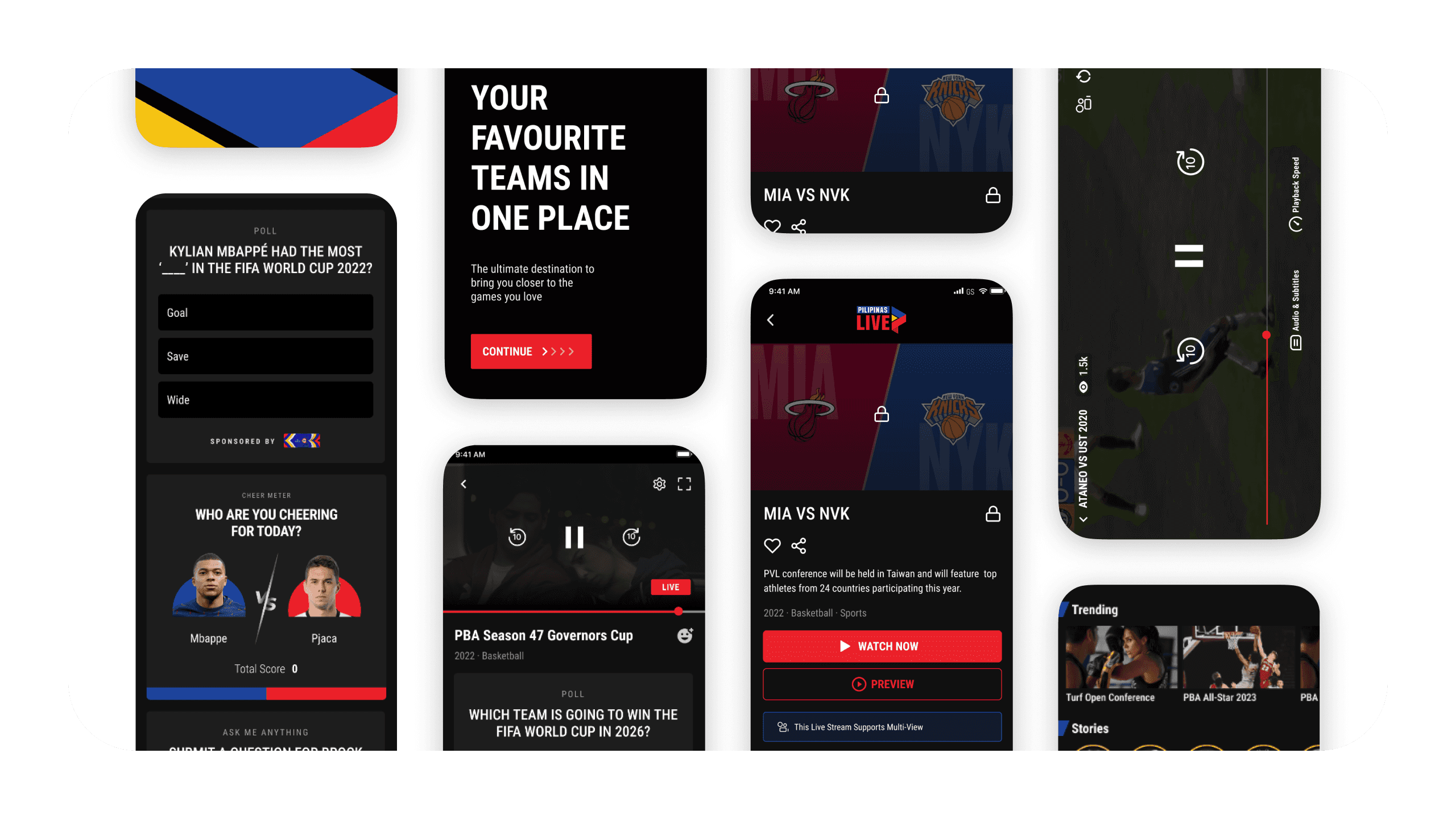
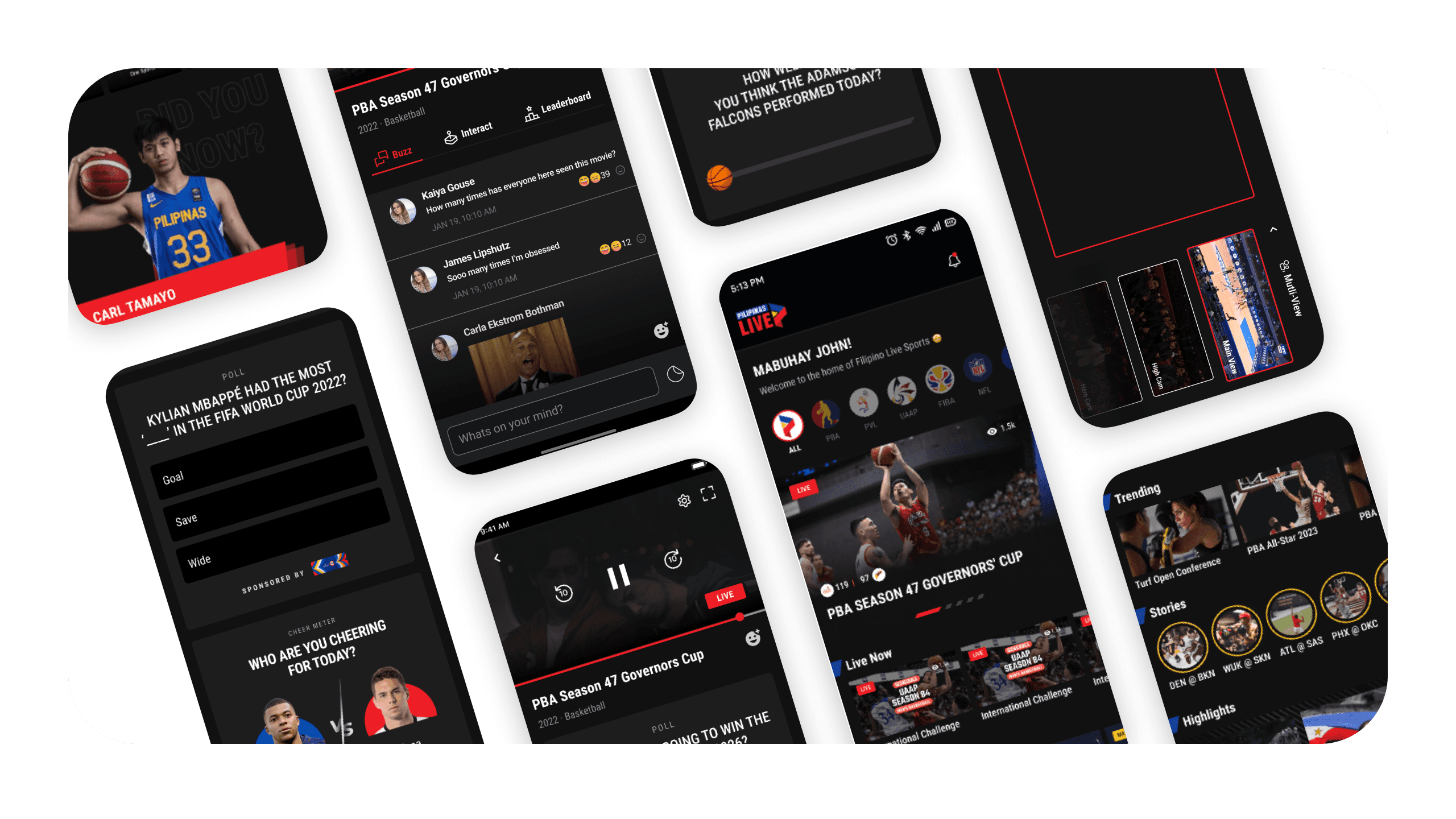
Live match overlays (scores, stats, predictions)
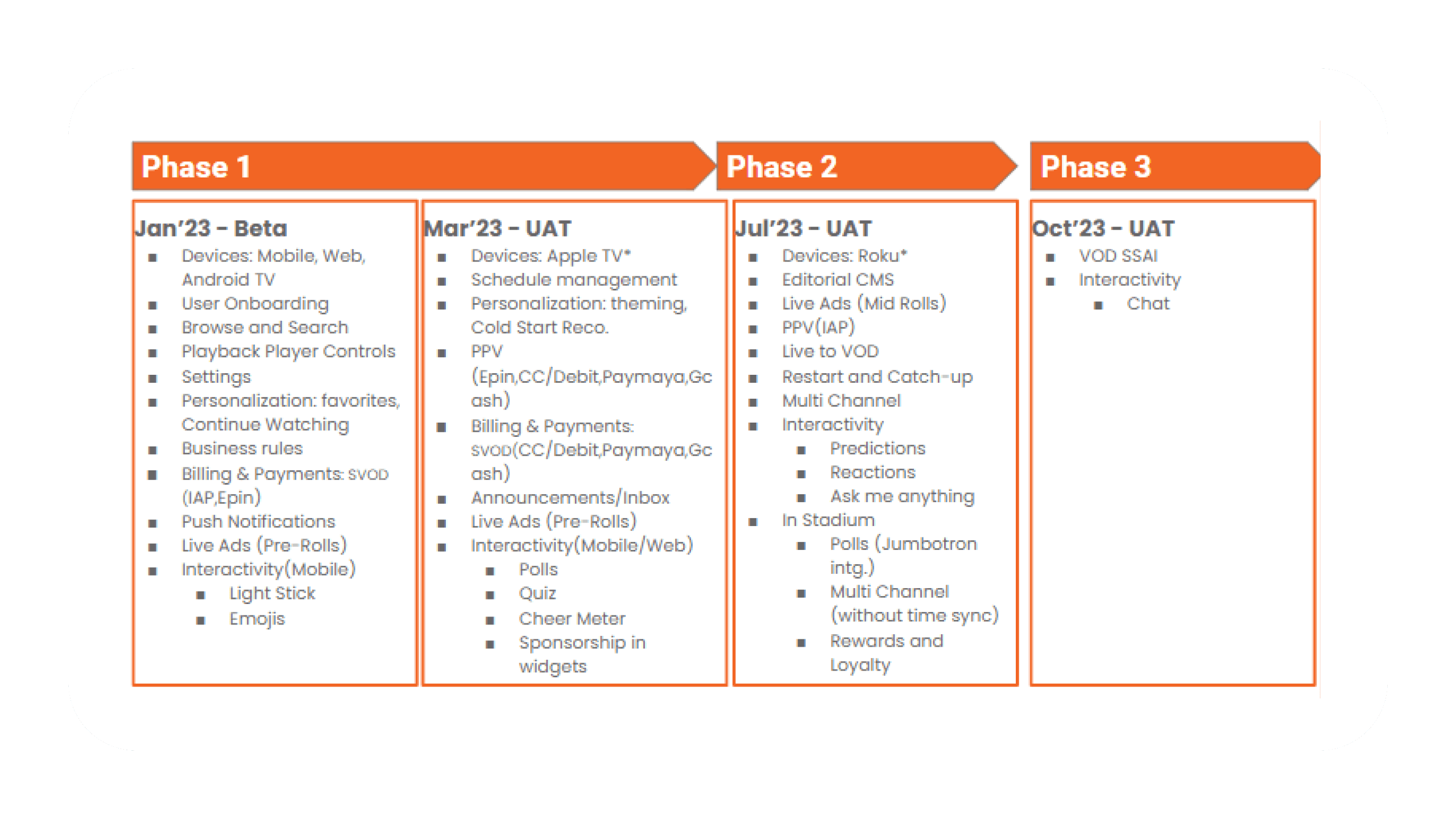
Interactive elements such as polls, reactions, cheer meters, and emojis
Personalization hooks like favorites, continue watching, and reminders
Content structuring for live, upcoming, and VOD experiences
Clear distinction between free vs premium value propositions
The focus was on creating high-energy, emotionally engaging moments without overwhelming the user during live play.
The process focused on designing systems, not isolated screens.
We approached the work by first understanding the rhythm of live sports which is anticipation, action, pause, and reflection then mapping opportunities where insight could enhance, rather than distract from, the experience.
The work unfolded across three parallel tracks:
Experience Framing
Mapping emotional and cognitive moments during live sports viewing.Concept Exploration Across Sports
Brainstorming interventions that could apply across NBA, NHL, NFL, and regional sports—ensuring ideas were adaptable within a white-label platform.Client-Facing Validation
Refining concepts through internal critique and external pitches to multiple sports platforms, including Pilipinas Live.
This ensured ideas were both strategically sound and operationally realistic.
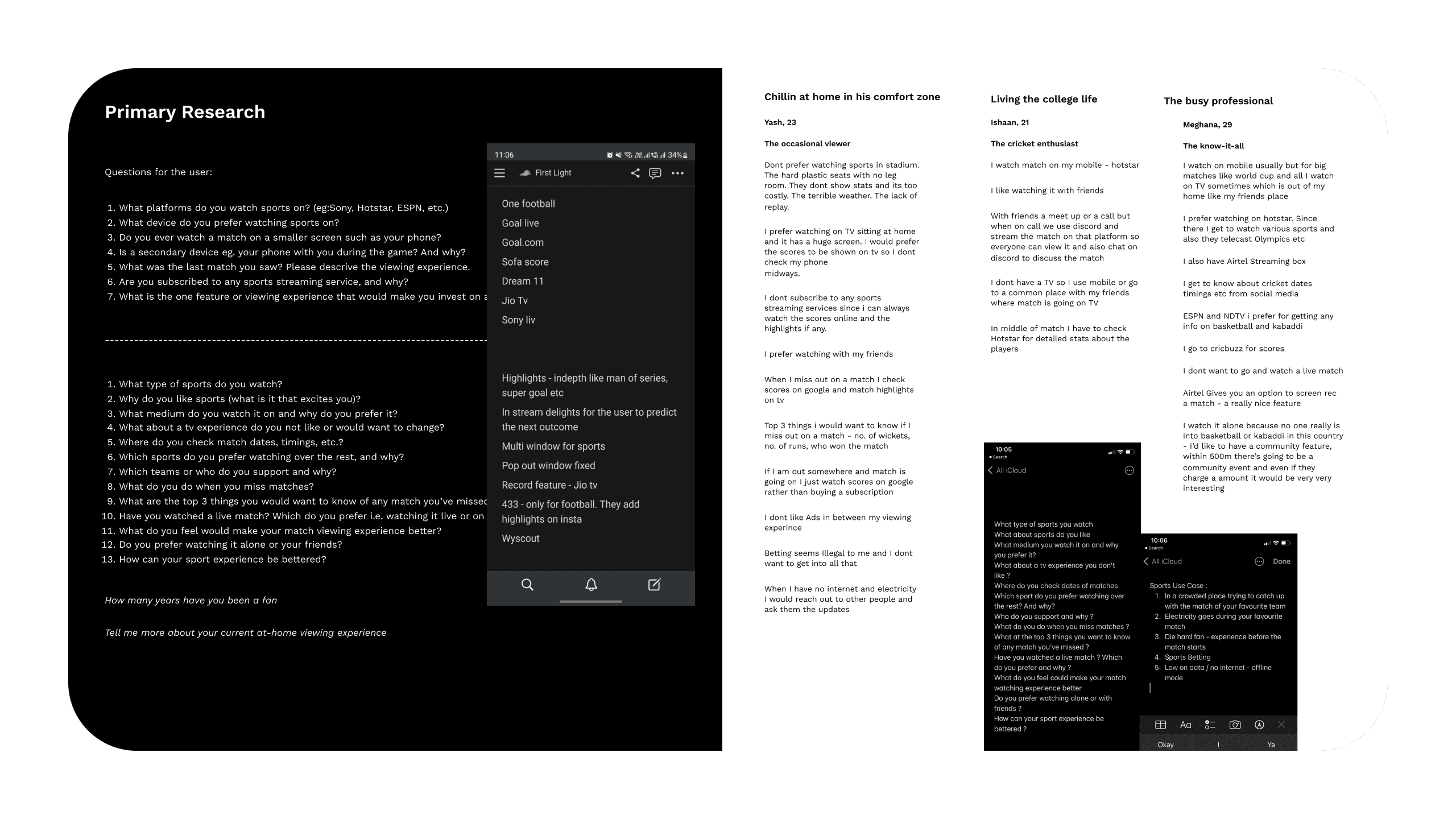
Research focused less on “what features exist” and more on how people make sense of live sports in real time.
Key inputs included:
Analysis of live-match attention patterns
Observation of viewer behavior during pauses, replays, and momentum shifts
Comparative review of sports OTT platforms and broadcast overlays
Internal exploration across global leagues and formats
Instead of designing for a single sport, we looked for repeatable cognitive needs clarity, anticipation, reassurance, excitement that transcend leagues and geographies.
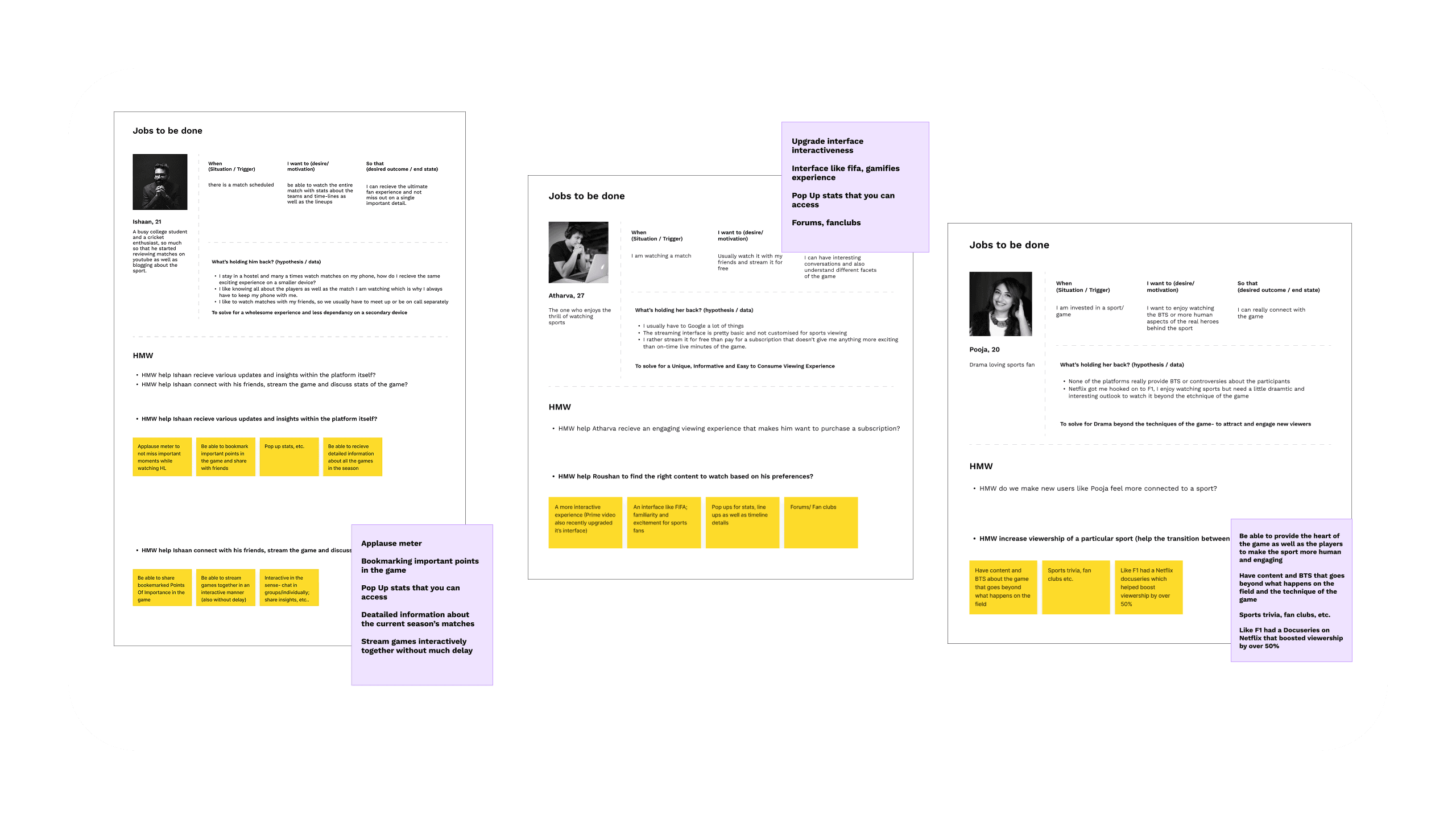
Persona
The sports viewer is emotionally invested, time-aware, and highly perceptive.
They don’t want to manage data they want it to meet them at the right moment, reinforce their intuition, or challenge it just enough to stay engaged.
Information Architecture
Information was structured using progressive disclosure and situational relevance:
Primary insights surfaced only at high-value moments
Secondary data remained accessible without competing for attention
Logic adapted based on sport, device, and match state
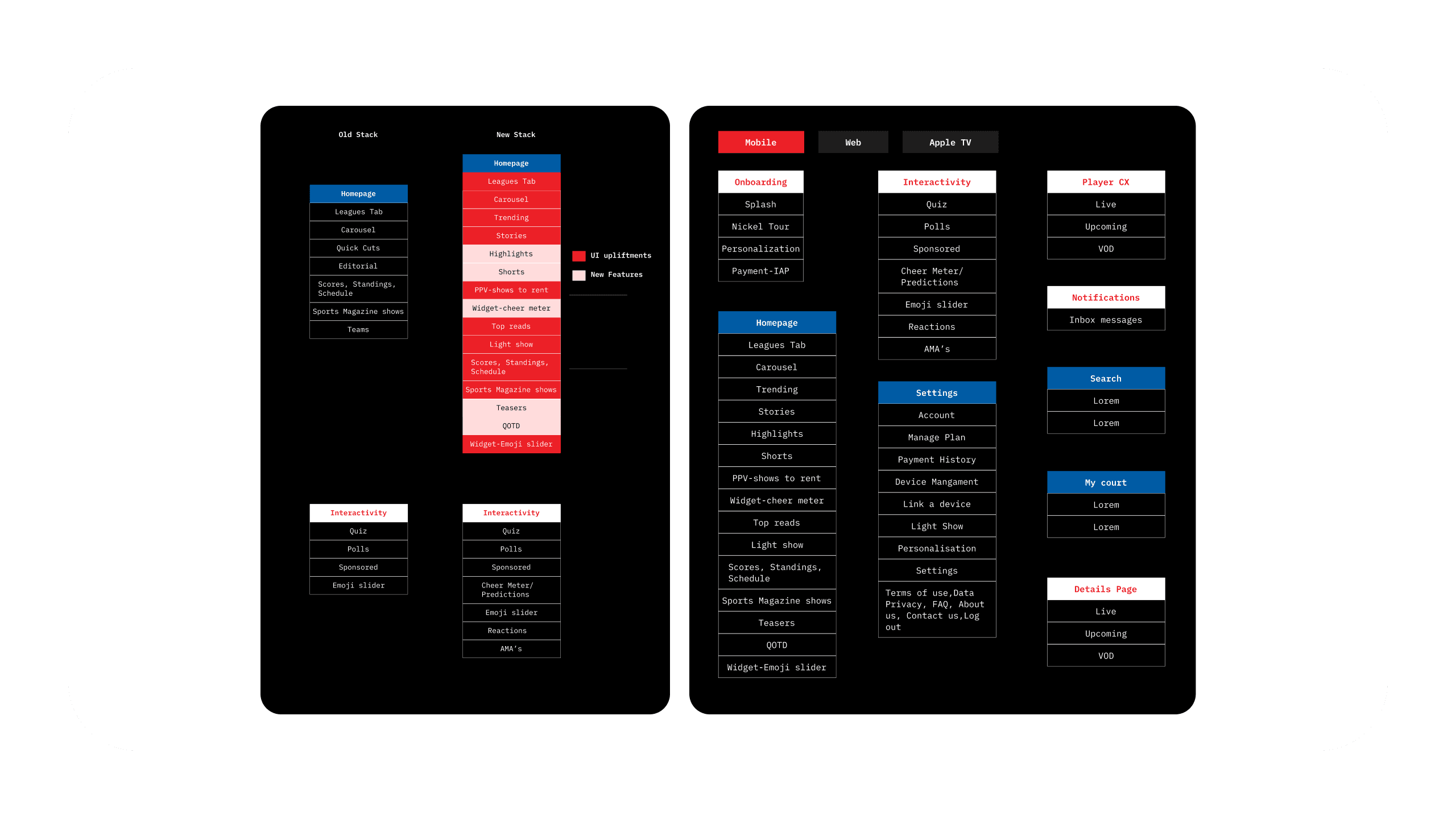
To support scalability, we created a logic map that tracked:
Feature applicability across sports
Device compatibility (mobile, tablet, desktop, TV)
Automation vs manual triggers
Development feasibility and status
This artifact became a shared language between design, strategy, and engineering—turning complexity into alignment.
Wireframes
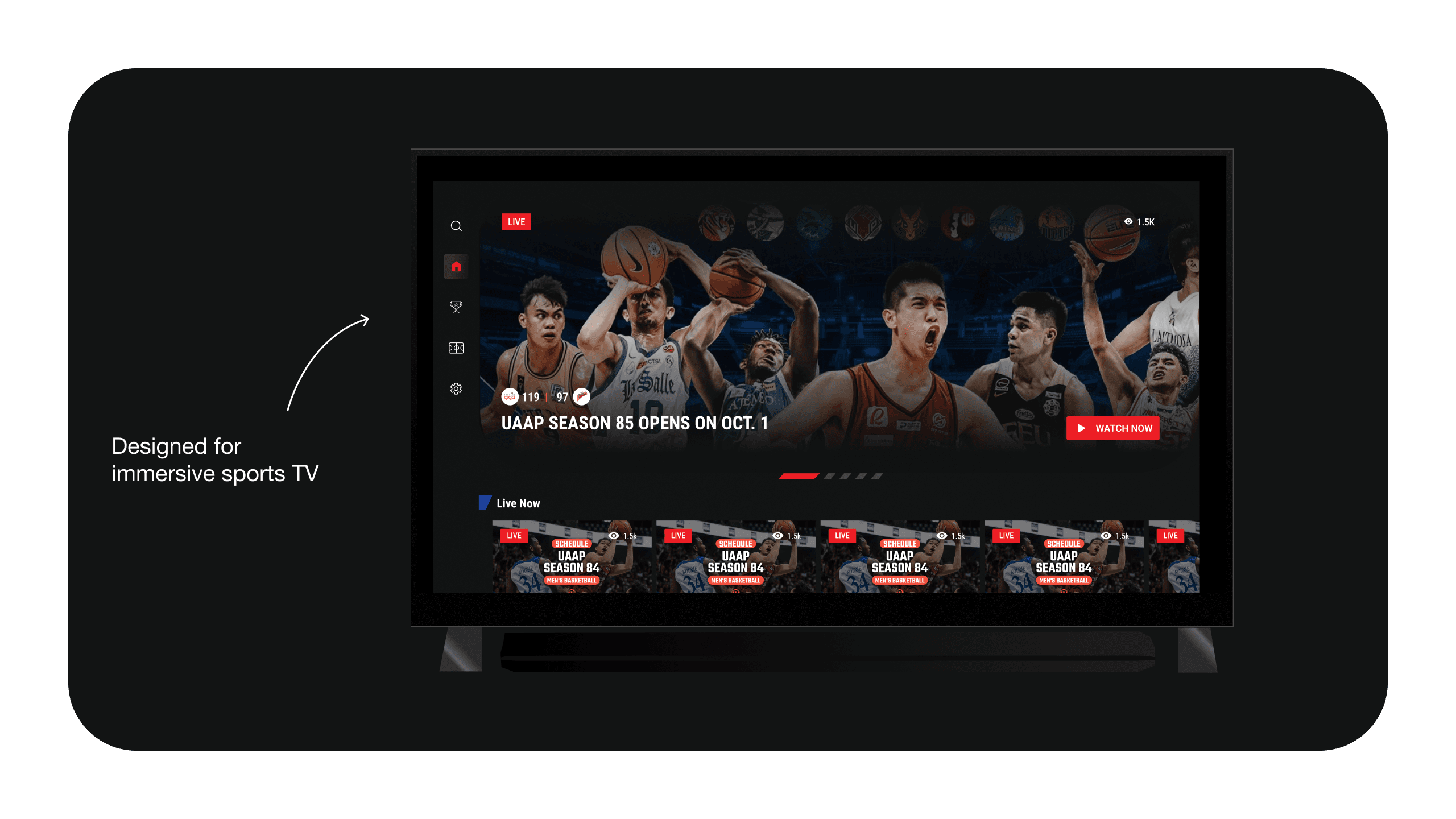
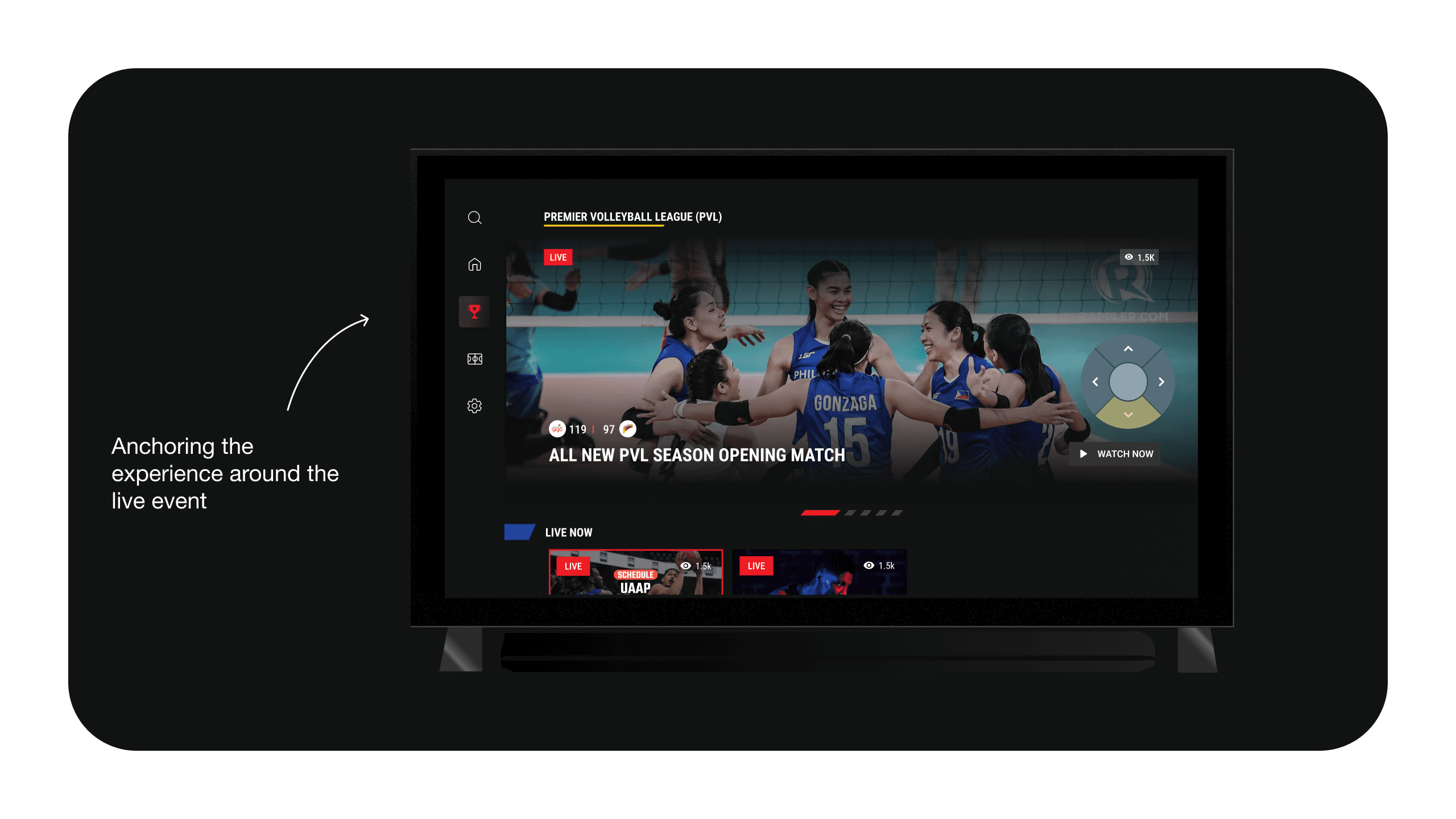
The wireframes for Pilipinas Live focused on designing a lean-back, TV-first experience that feels intuitive from the couch. I explored layout, content hierarchy, and navigation patterns optimized for remote control interactions, ensuring users could quickly discover live games, replays, and featured content without cognitive overload.
Visual Identity & Design System
Final UI Designs
Feedback
"As a Filipino in America it is a must to have!" "Great Content Coverage" "Affordable Sports Access" "What immediately stands out about Pilipinas Live is how polished the experience feels compared to other local streaming options. The intuitive interface is clearly 'legit' and well-tested; it sports a modern, up-to-date look that makes navigating through different leagues and live channels feel seamless. "The on-the-go accessibility is a game-changer, especially for Filipinos living abroad. It is incredibly easy to use on mobile devices, providing a quick and reliable way to stay connected to home court action no matter where you are in the world. Whether you're commuting or watching from a different time zone, the app delivers a professional viewing experience that truly brings the energy of Philippine sports right to your pocket."
Pilipinas Live App Users
Prototype
Reflection
My Role & Contributions
I worked as a Product / UX Designer, owning and contributing across:
UX research and sports interaction ideation
Feature definition and experience flows
Visual and interaction design across devices
Prototyping and internal client pitches
Collaboration with engineers and product stakeholders
Supporting interns (Prachi & Jordan) as Experience Design Interns
I also managed multiple Quickplay client tracks in parallel, ensuring consistency while adapting designs to each client’s audience and content strategy.
Managing multiple white-label clients while leading initiatives like Pilipinas Live significantly shaped how I approach product strategy.
Balancing parallel projects required:
Rapid pattern recognition
Clear prioritization
Strong communication across teams
Designing frameworks that outlive individual features