Overview
Youth In Politics
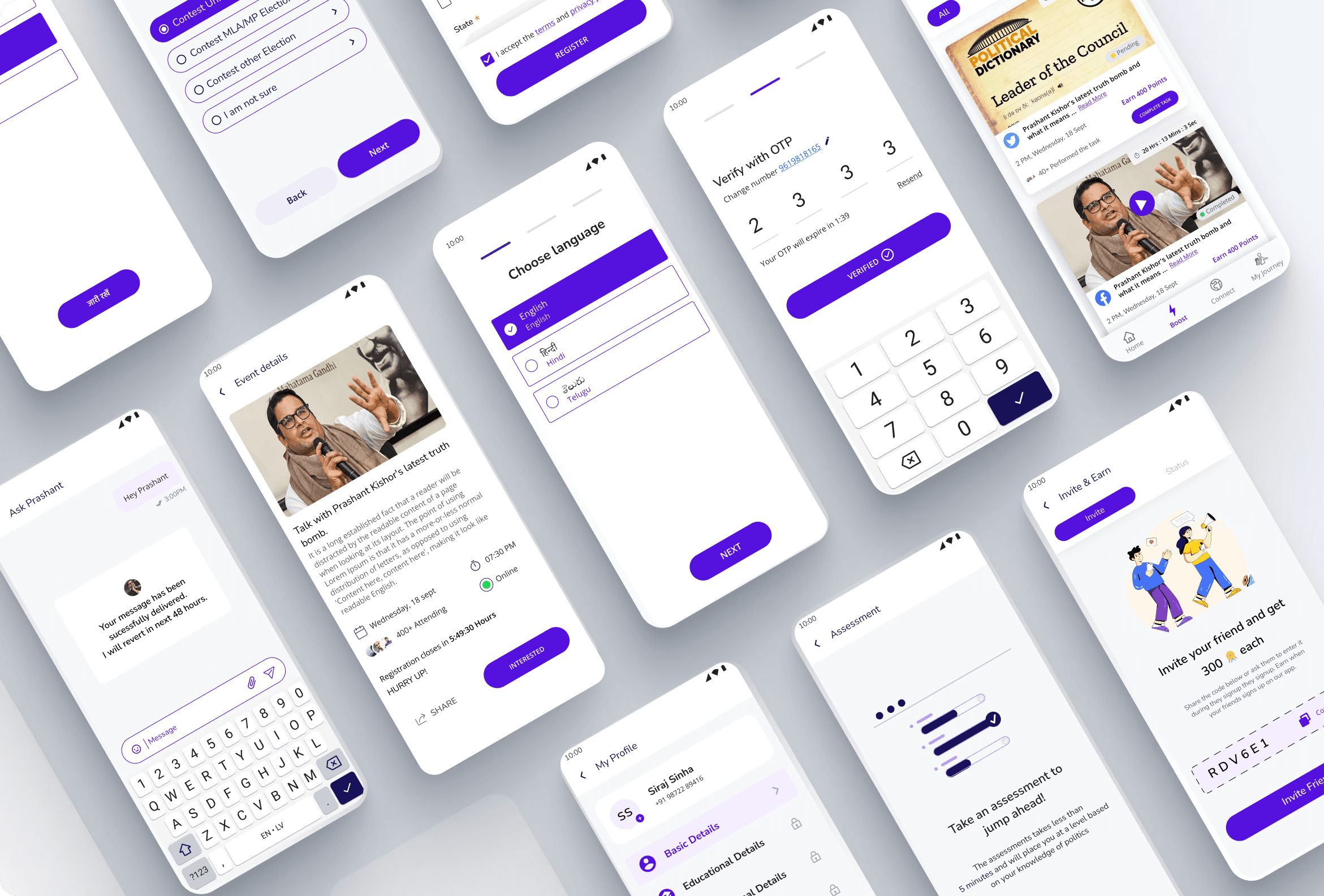
We created a first of its kind political training and mentorship platform designed for young Indians who want to learn politics, enter governance, or contest elections. YIP simplifies political learning, connects users with mentors, and guides them through real-world political processes. The product reached more than 50,000 users and earned a 4.1 rating on the Play Store, becoming one of the most successful apps in this niche.
Company:
I-PAC
Domain:
EdTech · B2C
Timeline:
3 weeks
Platform:
Mobile & Desktop
Responsibilities:
UX Research · UI Design · Prototyping · User Testing
Team:
Manushri Dave · UX Designer
Animesh Dwivedi · UX Designer
Alok · Project Manager
Murali · Full Stack Developer
Mintu · Full Stack Developer

The Result
The platform saw strong adoption and engagement shortly after launch, validating both the product direction and execution speed.
India has the world’s largest youth population, yet young people remain significantly underrepresented in political participation and decision-making. Traditional political education is scattered, expensive, and often inaccessible to students or early professionals.
Young Indians need affordable training, accessible mentorship, and a structured pathway to understand and participate in politics.
YIP emerged as an opportunity to democratize political education and enable youth to contribute meaningfully to governance.
The Problem
India’s political ecosystem offers limited, informal, and costly pathways for youth engagement, leaving motivated young people without guidance, clarity, or confidence to navigate politics responsibly and effectively.
Young people struggle to enter politics due to:
Limited access to political training and mentorship
Lack of clarity about political processes and strategies
Low trust in political systems and institutions
Complex and region-specific requirements
High cognitive load and overwhelming information
The result is a generation that is interested in politics but unsure of where or how to begin. I
Stakeholders
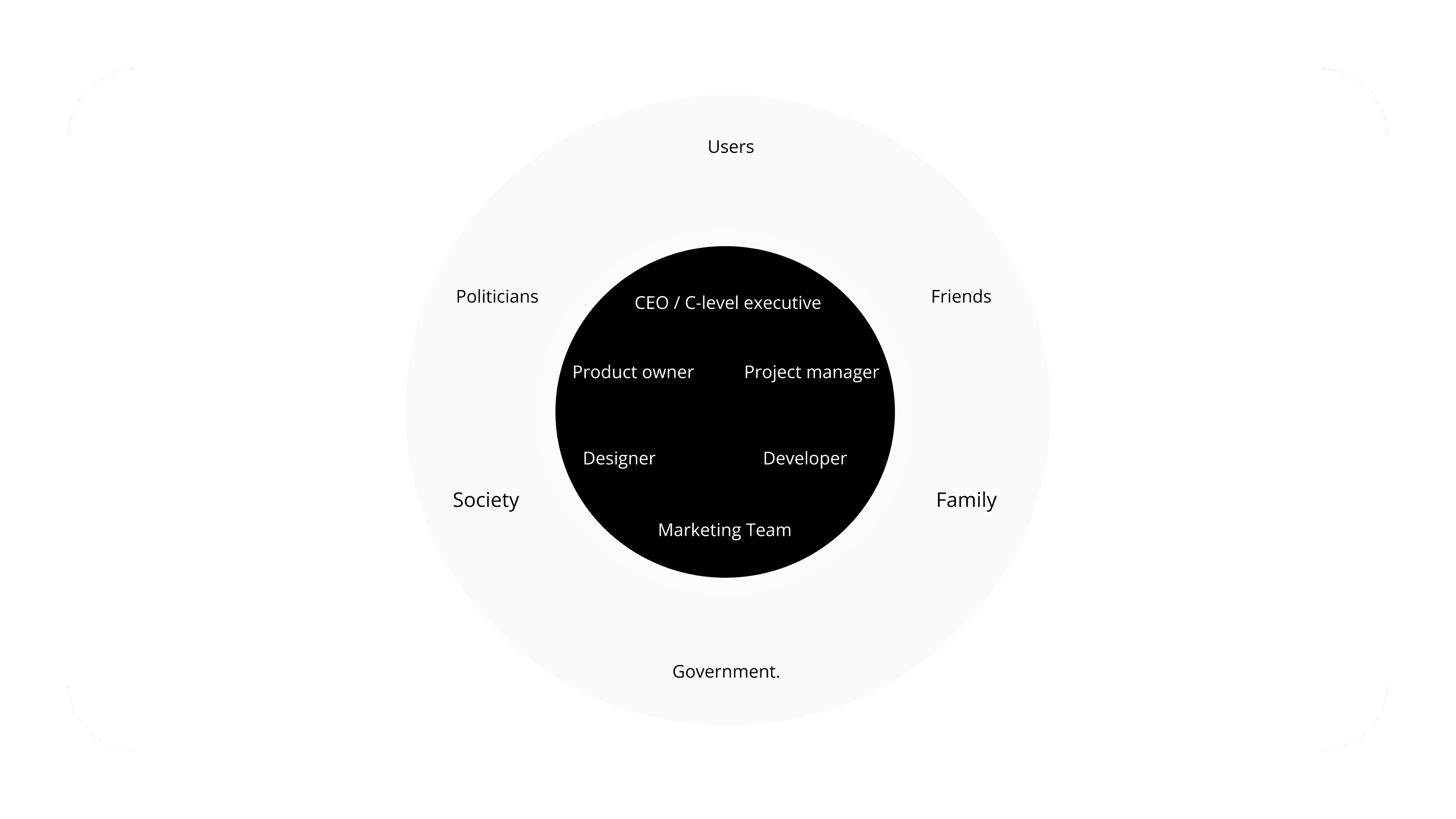
Stakeholders include YIP fellows, new users, marketing teams, digital communications, product teams, admin teams, and senior decision-makers.
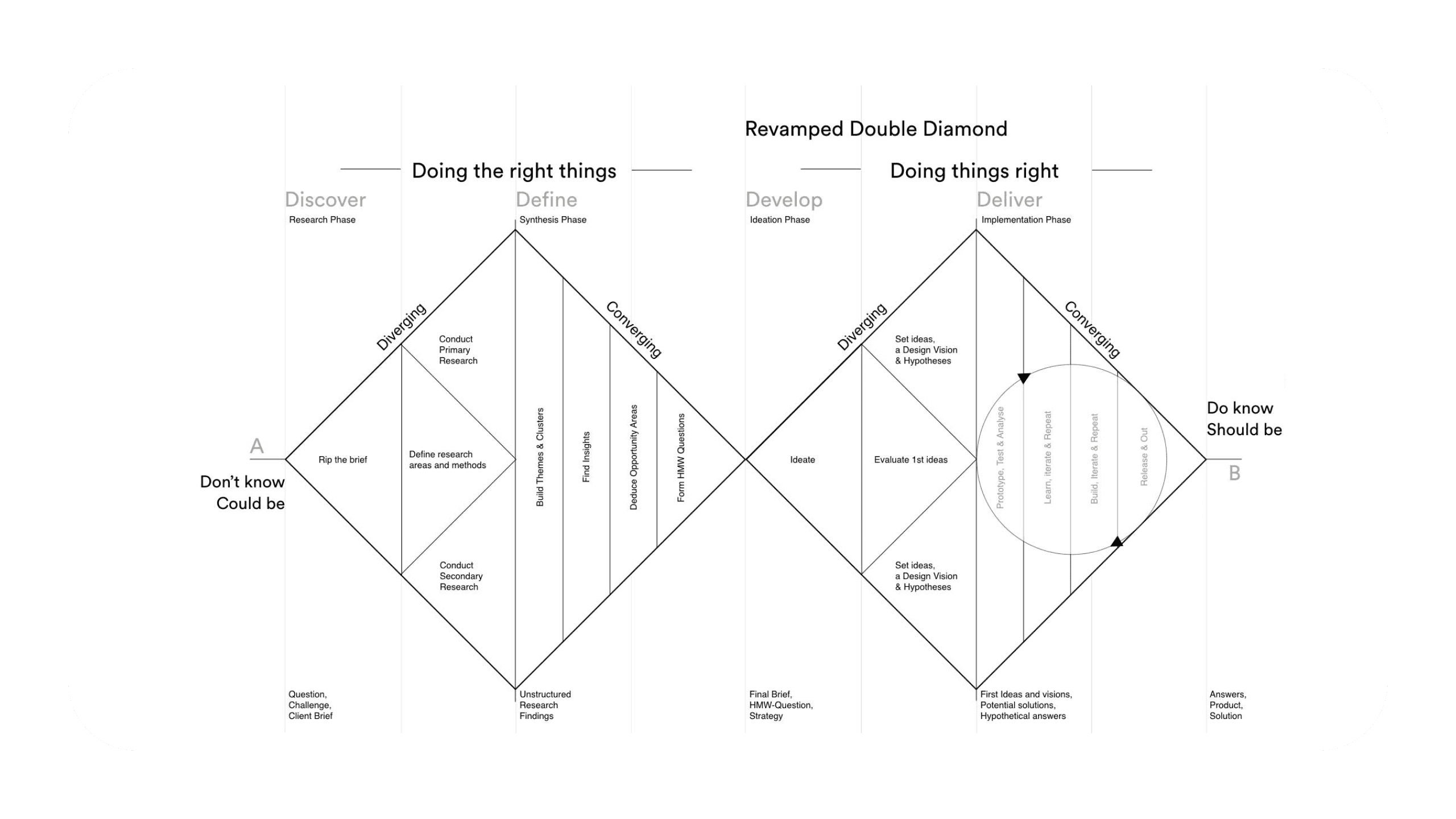
We used the Double Diamond to first understand the real barriers young people face in entering politics, then narrow down to clear, actionable solutions.
The process helped us explore trust, clarity, and accessibility issues early, align on focused problem statements, and quickly converge on designs that were simple, credible, and scalable.
This approach ensured we solved the right problems without slowing down delivery.
Secondary Research
Our analysis of youth participation studies, UN reports, and policy frameworks revealed the following:
Young citizens feel unheard and excluded from decision-making
Political information is inconsistent and difficult to find
Youth face social and economic barriers to participation
Women experience double discrimination based on age and gender
Political institutions are not perceived as trustworthy or youth-friendly
Primary Research
Participants
Young adults aged 18 to 35 from rural, semi-urban, and urban backgrounds with mixed levels of digital literacy.
Methods
100+ offline interviews
300+ online survey responses
Field observations
Heuristic evaluation
Competitive analysis
Persona
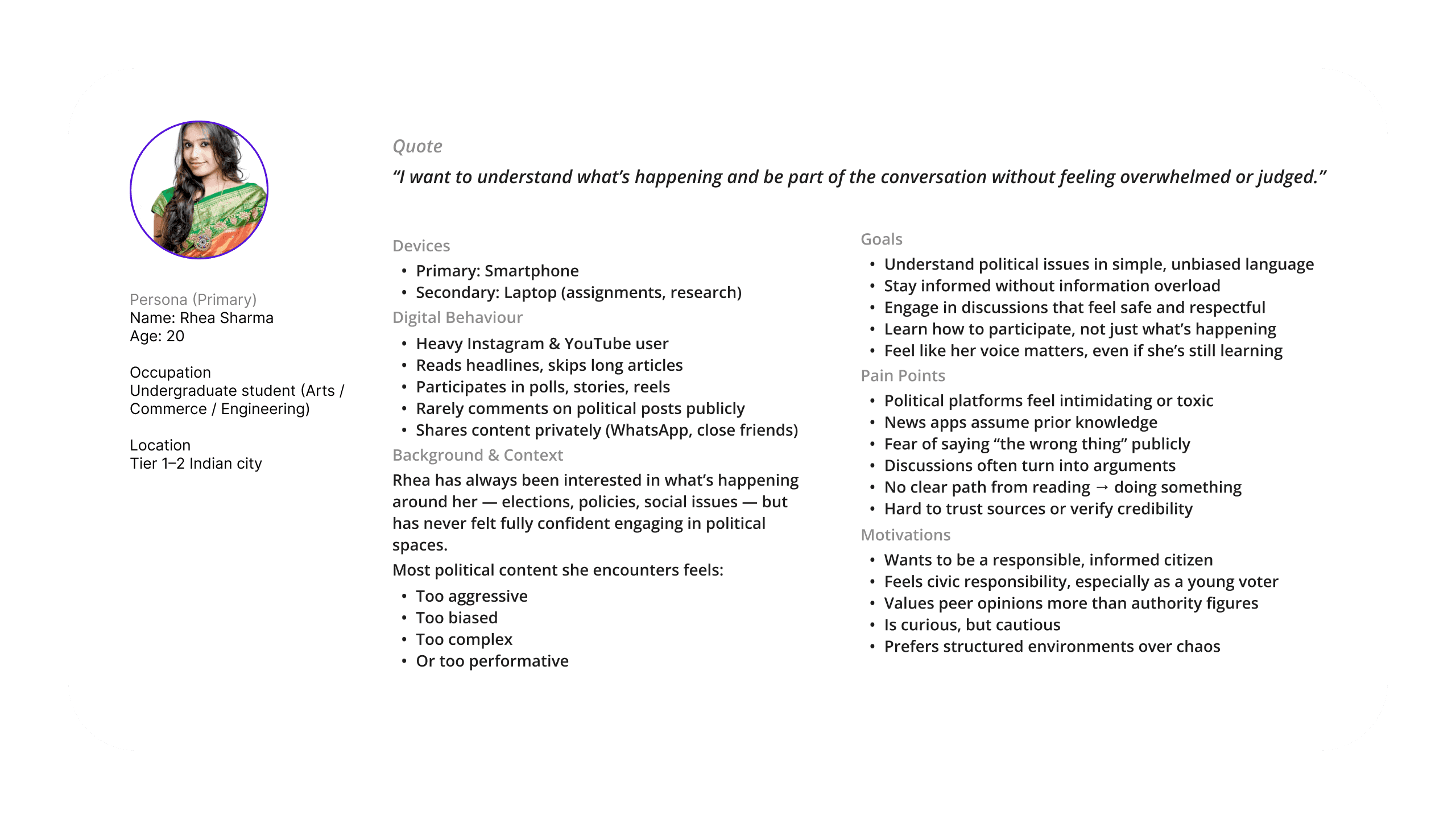
To ground the experience in real behavior, I defined a primary persona representing young, first-time political participants who are curious but cautious. This persona captured key motivations, anxieties, and usage patterns I was seeing across student users — especially the need for clarity, safety, and low-pressure engagement. Having this reference helped keep decisions focused on making political participation feel approachable rather than overwhelming.
Information Architecture
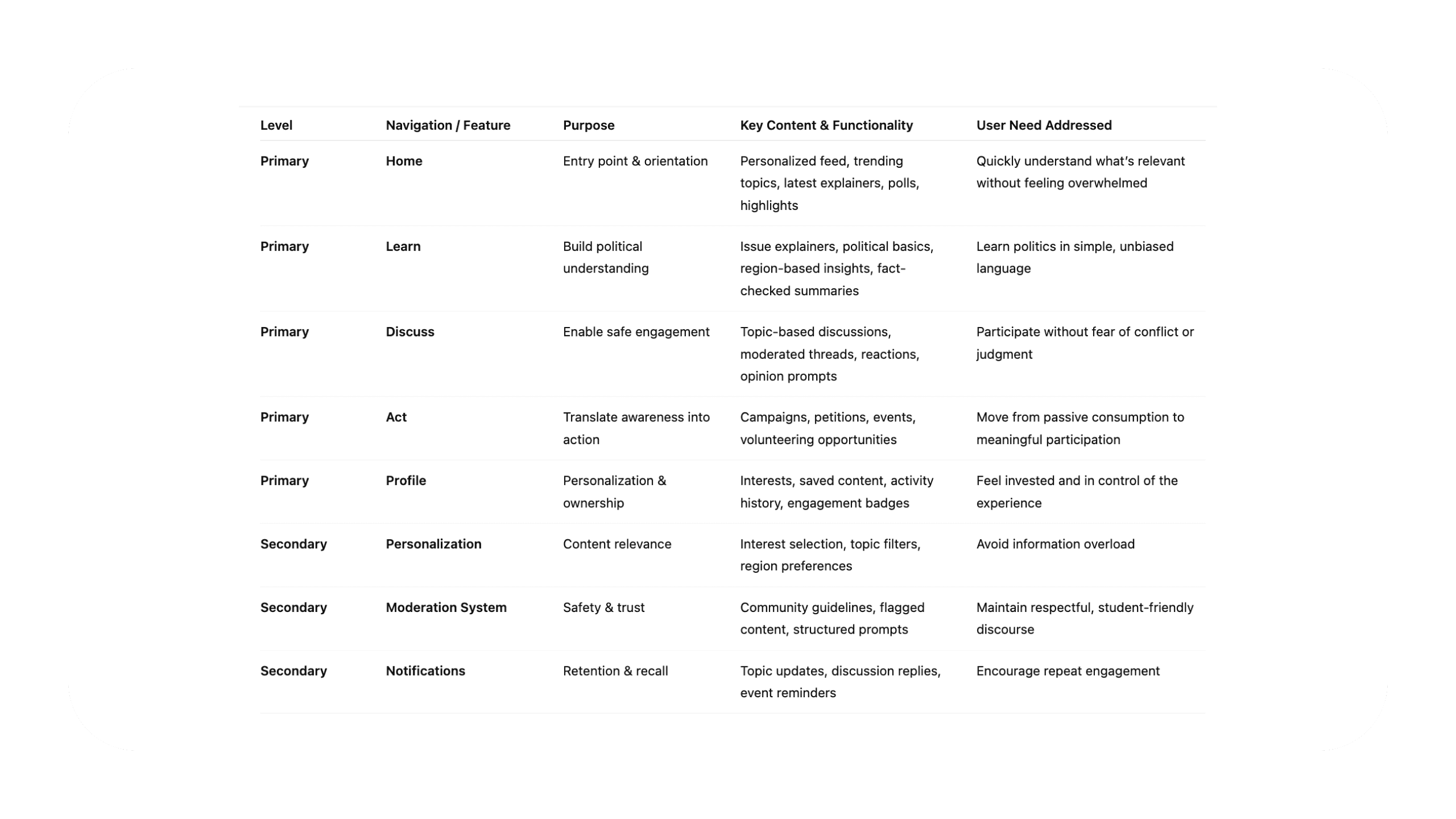
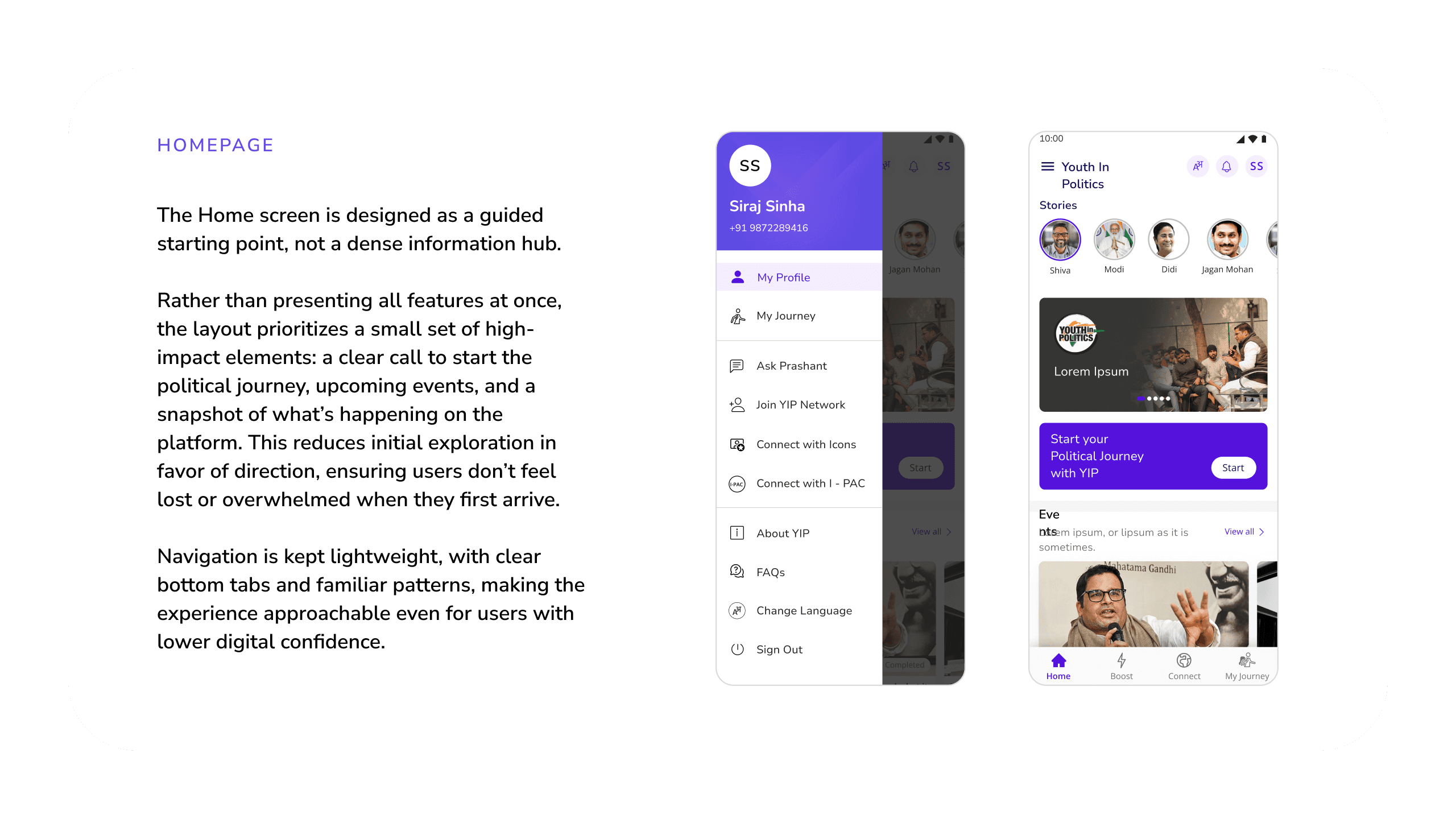
The IA prioritizes relevance over volume. Core actions like learning, discussing, and acting are clearly separated to prevent cognitive overload. Secondary features support personalization, moderation, and retention without disrupting the main flow.
Wireframes
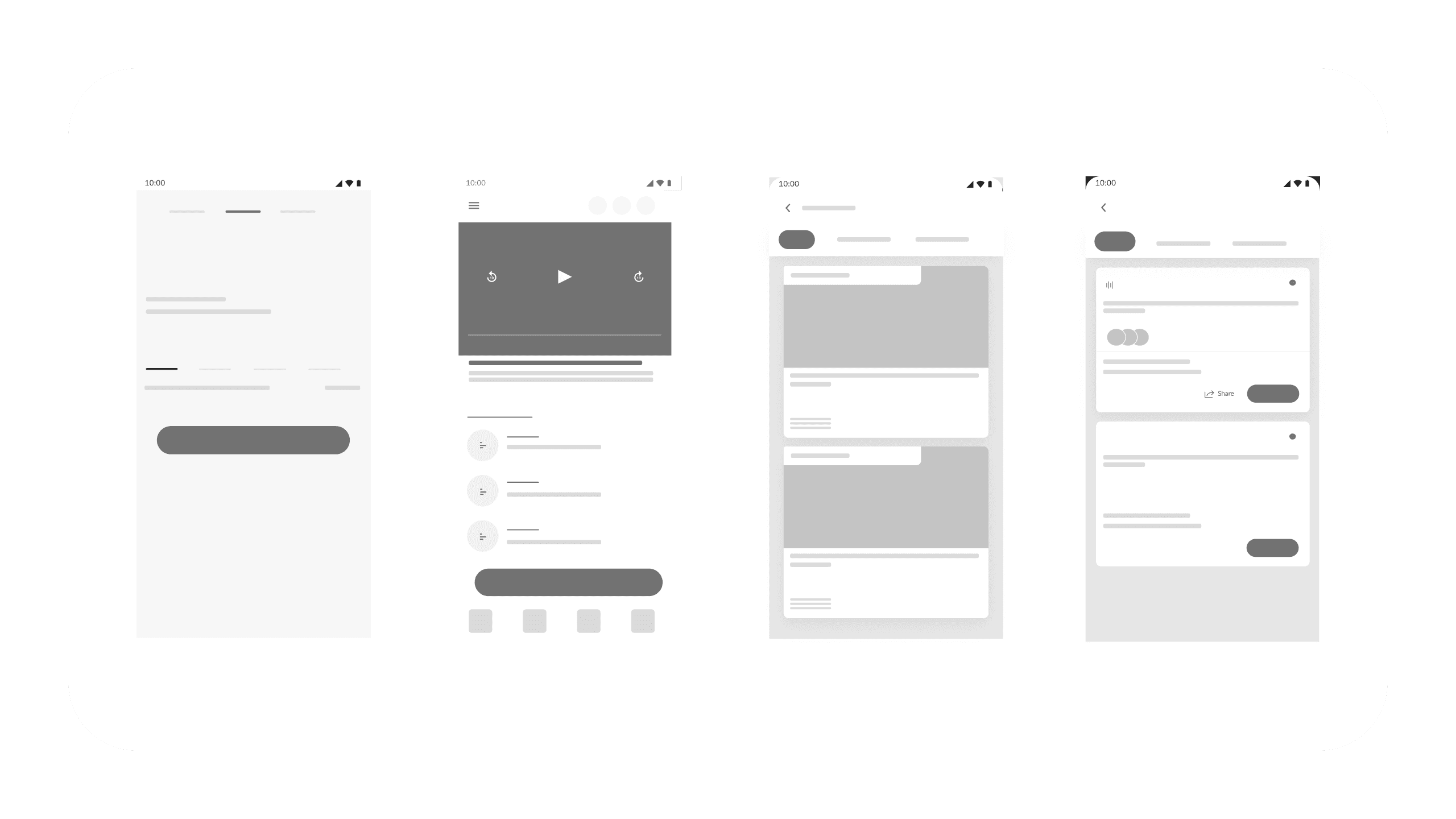
Wireframes helped translate strategy into structure quickly. I focused on hierarchy, clarity, and flow — prioritizing readability and intuitive navigation over visual polish at this stage. This allowed us to validate key flows, identify friction early, and iterate rapidly, which was critical given the tight timeline.
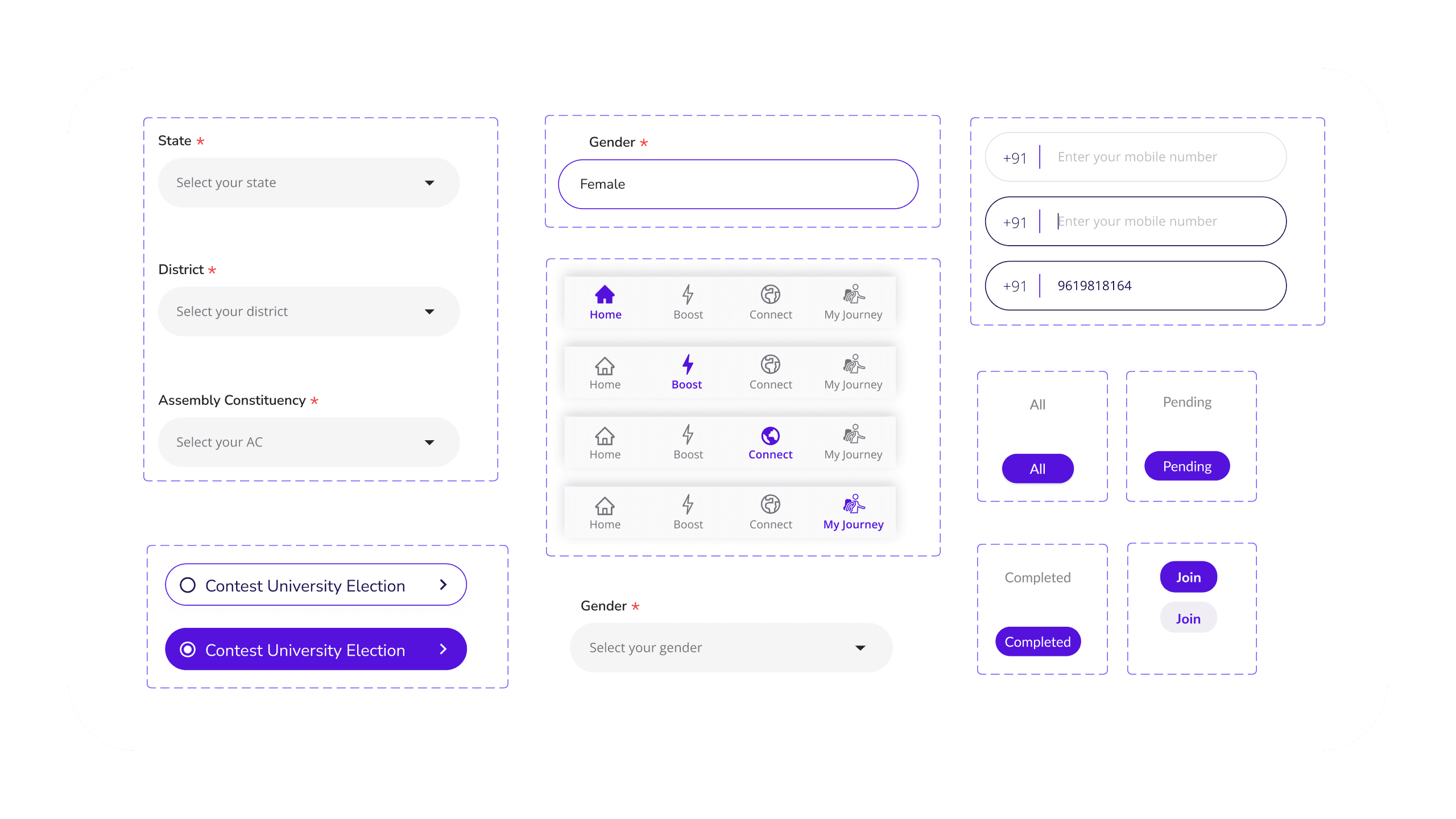
Visual Identity & Design System
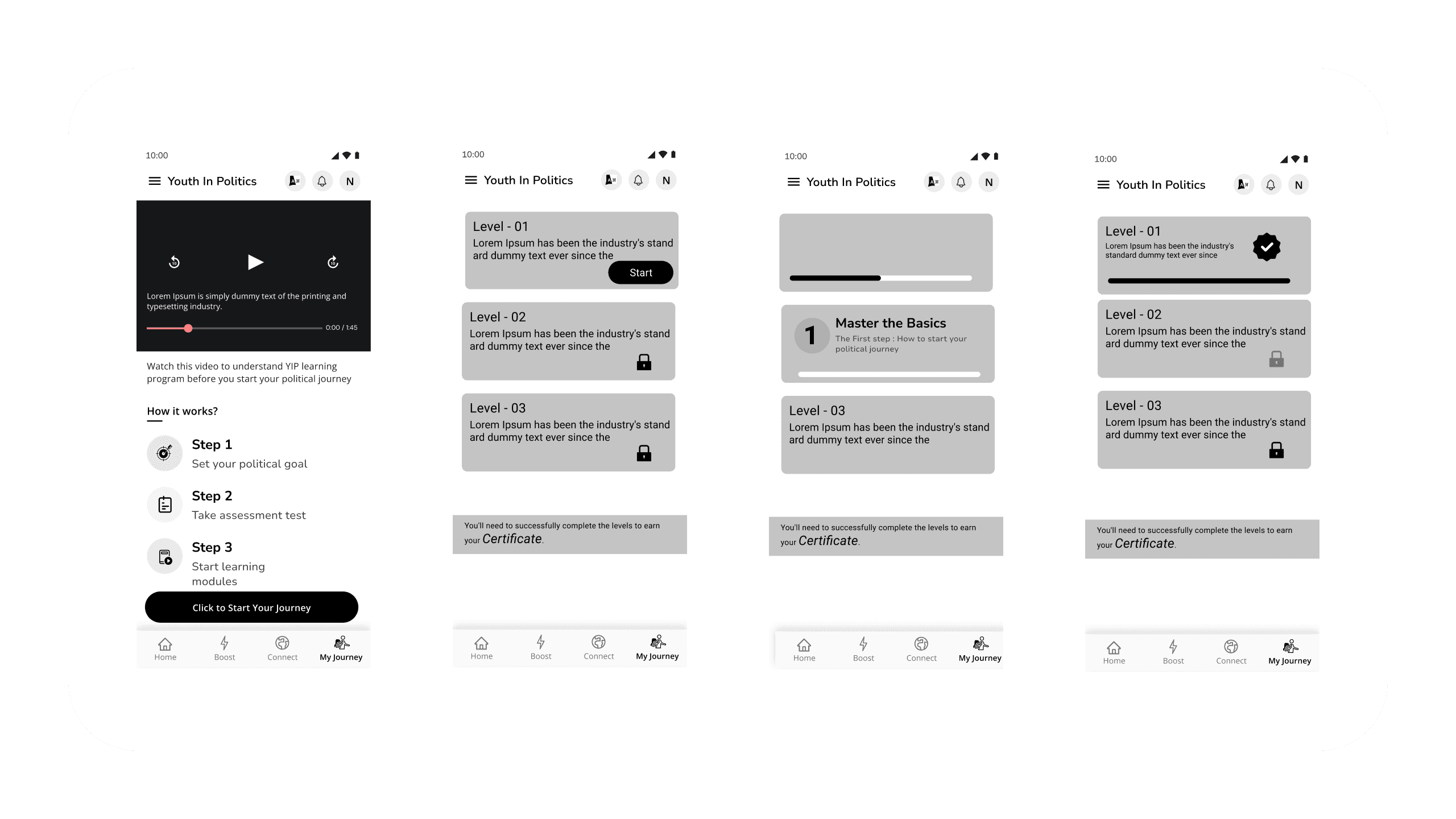
Final UI Designs
Feedback
“YIP makes learning about politics feel far less intimidating and a lot more doable. The app breaks down complex ideas into clear steps, pairs learning with real mentors, and gently guides users toward action without overwhelming them. It’s a refreshing take on political education that feels structured, human, and genuinely useful.”
Abhijit
YIP User
Reflection
This project reinforced the importance of designing with emotional sensitivity, especially in civic and political contexts. Users weren’t just learning a system they were confronting uncertainty, social pressure, and self-doubt about entering politics. Every design decision needed to balance clarity with reassurance.
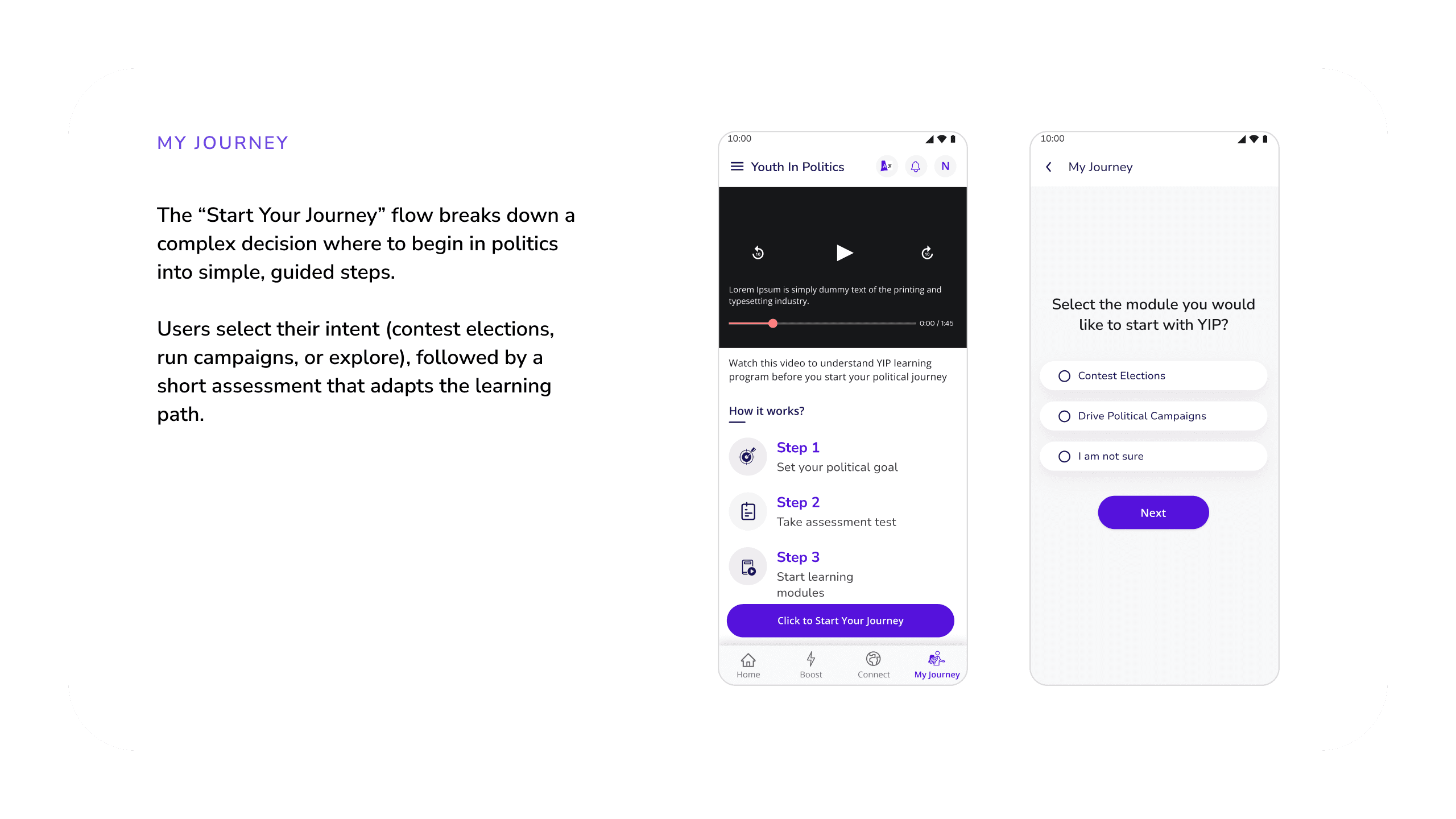
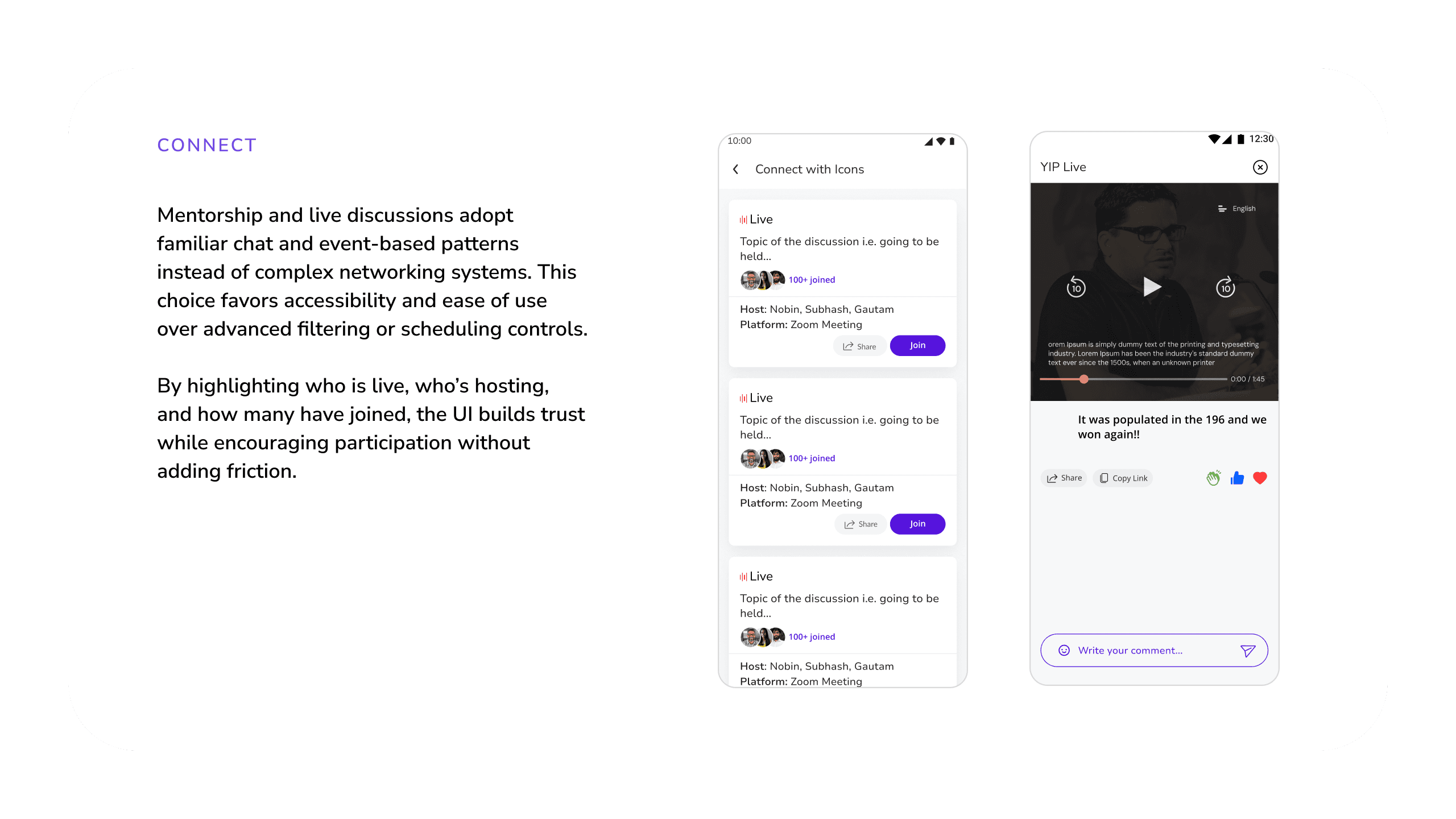
We learned that simplifying complex processes does not mean dumbing them down; it means structuring information in a way that builds confidence step by step. Mentorship emerged as the strongest driver of engagement, validating the decision to center the product around real human guidance rather than content alone.
The experience also highlighted how critical localisation and tone are when designing for a diverse population. What feels intuitive in one context can feel intimidating in another, making continuous iteration essential.